
In product development, a picture is worth a thousand changes.
Designing a product versus designing a system is the difference between building a single item and building a foundation that can expand into a range without a full redesign. The choice between the two costs almost nothing to consider at concept stage, but can be much more expensive later on.
The "Now What?" Moment Every Successful Product Hits
You have a great-looking sketch. You send it to a model house or factory, and a few weeks later, your first prototype arrives. Seeing your idea come to life for the first time is genuinely exciting…you can hold it, touch it, show it around.
But despite your concept drawing looking exactly how you pictured it in your mind, the first sample often comes back with differences. You sit down and list out every change needed to bring it up to your expectations. "This is a reasonable attempt," you think, "I am sure they will get it now."
Two weeks later, the second sample arrives. It still misses the mark. They missed points two and five on your list entirely. You asked for it to be ten percent smaller, and now it is far smaller than that and completely wrong. Back to the keyboard, again.
That cycle, multiple rounds of changes, thousands of additional dollars, and months of delay, is one of the most common and most avoidable frustrations in physical product development.
Four Barriers, Compounding Each Other
Working with factories in Asia means navigating language, culture, distance and time all at once, and the combination makes each one harder than it would be alone. A written list of changes typically fails because the person making the prototype does not have English as their first language, and instructions get lost in translation.
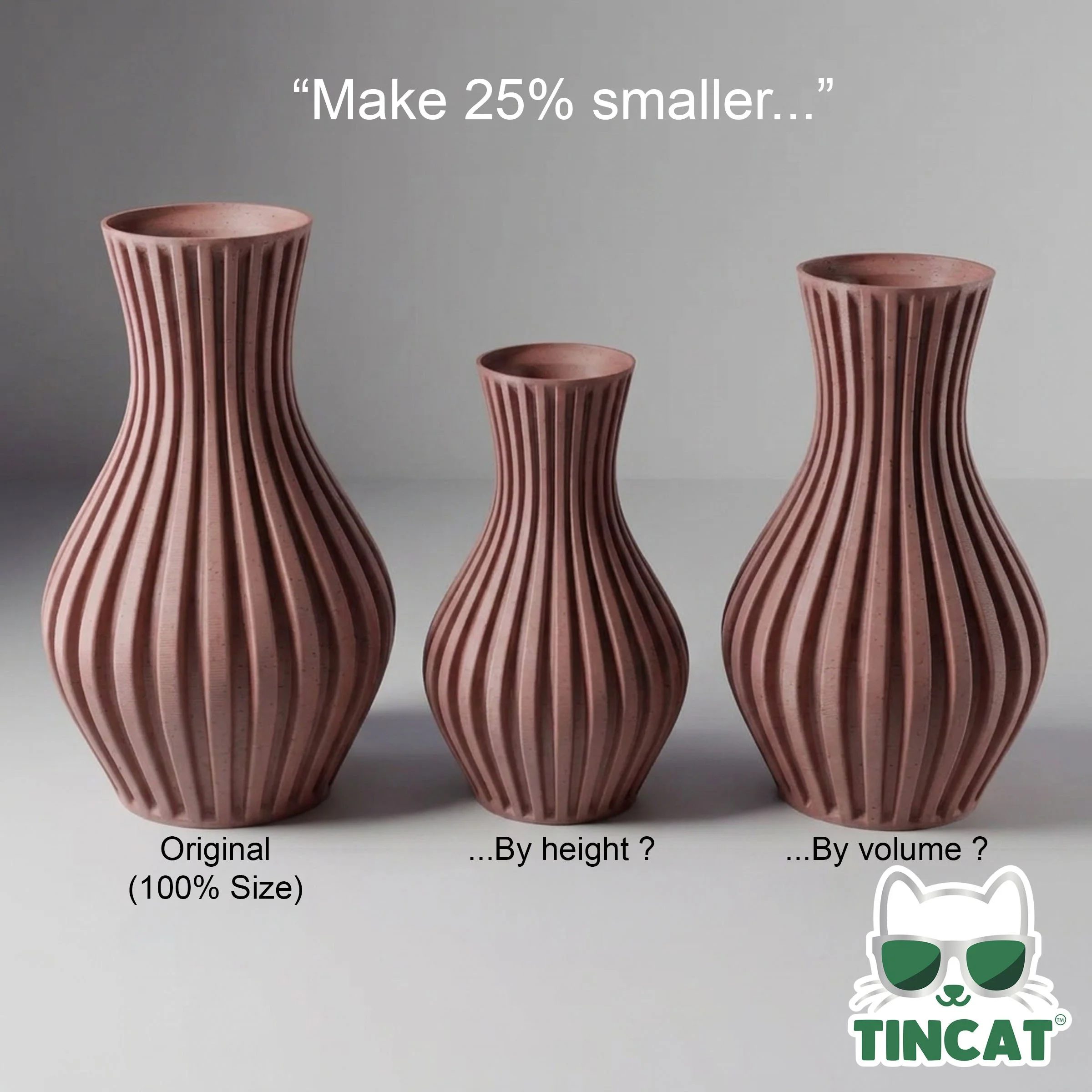
"Make it smaller" or "make the colour darker" are open to wide interpretation.
Even something as specific as "make it 15% smaller" is not safe. A factory might read that as 15% less volume, or 15% shorter. The second interpretation can make the actual volume closer to 40% smaller! The list of ways instructions like this go wrong is a long list in itself.
Show It, Do Not Describe It
Visual overlays solve this directly. A professional product developer can take a stakeholder's feedback and draw the new parameters straight onto photos of the actual sample, showing exactly how the appearance needs to change without relying on language to explain it. A holistic product developer will also make sure those changes are checked for manufacturability at the same time, so what is being requested can actually be produced.
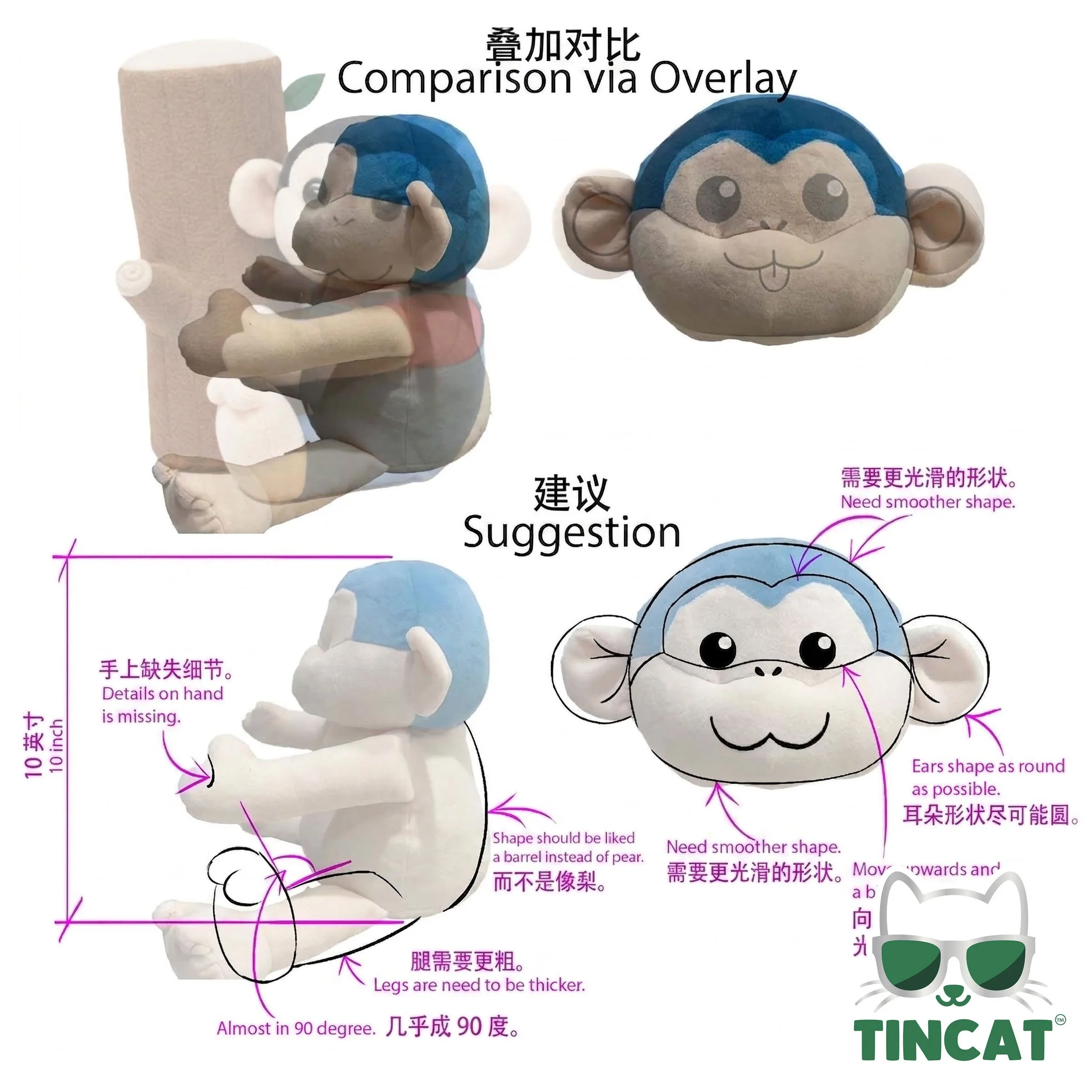
Reference images make this even clearer.
"Gold" has six distinct colours in the Pantone matching book, and more than 80 in the metallic range. A photo of the exact gold you want, or a close-up of the fabric texture you are after, marked directly onto the overlay as a callout, removes the ambiguity a word like "gold" or "textured" always carries on its own.
Physical samples go one step further again, and they can come from anywhere, including a completely different industry. On one project, we cut up a pencil case to send across a specific feature we wanted replicated on a plush bear.
Language Still Matters, Even on a Visual Overlay
Where written comments are still needed on the overlay, they should be in the primary language of whoever is making the sample. At Tincat, our product designers work fluently across Mandarin, Cantonese, English, and Vietnamese, specifically so nothing gets lost between what a stakeholder asks for and what a factory actually builds. A visual problem needs a visual solution, and the language wrapped around that visual still has to land correctly too.
“Draw it, photograph it, mark it up, and hand over a reference sample”
Expert Insight
"Most of the frustration we see in sampling has nothing to do with skill on the factory floor," says the Tincat team. "It comes from a stakeholder assuming a written instruction means the same thing to someone on the other side of the world, in a different language, working from a different cultural frame of reference. Draw it, photograph it, mark it up, and hand over a reference sample wherever you can. That is what actually closes the gap, not a longer, more detailed list of words."
What This Means for Your Product
Before your next round of sample feedback, put the changes on a photo of the actual sample, not in a document. Use real reference images for anything involving colour, texture, or finish. Send a physical swatch if you can find one, even from an unrelated product. And make sure any written notes are in the maker's own language, not just translated after the fact.
Get sample reviews that use visual overlays and design for manufacturing checks together, so changes land right the first time. Contact Tincat
Frequently Asked Questions
-
A: Not entirely, some written notes are still useful for context, but they should be minimal, specific, and written in the maker's own language rather than relying on English phrasing to carry the full instruction on its own.
-
A: It varies by product, but the biggest saving is not in the number of rounds itself, it is in each round actually landing closer to correct, rather than repeating the same misunderstanding in a different form.
Written by the Tincat Team