
‘Material selection’ is the process of matching a product's use conditions, price point, finish, and manufacturing method to a specific material before design is locked in. It matters because the two most common ways founders handle it, choosing by feel or leaving it to the factory, invites major issues downstream.
Material Sounds Technical, So It Gets Skipped
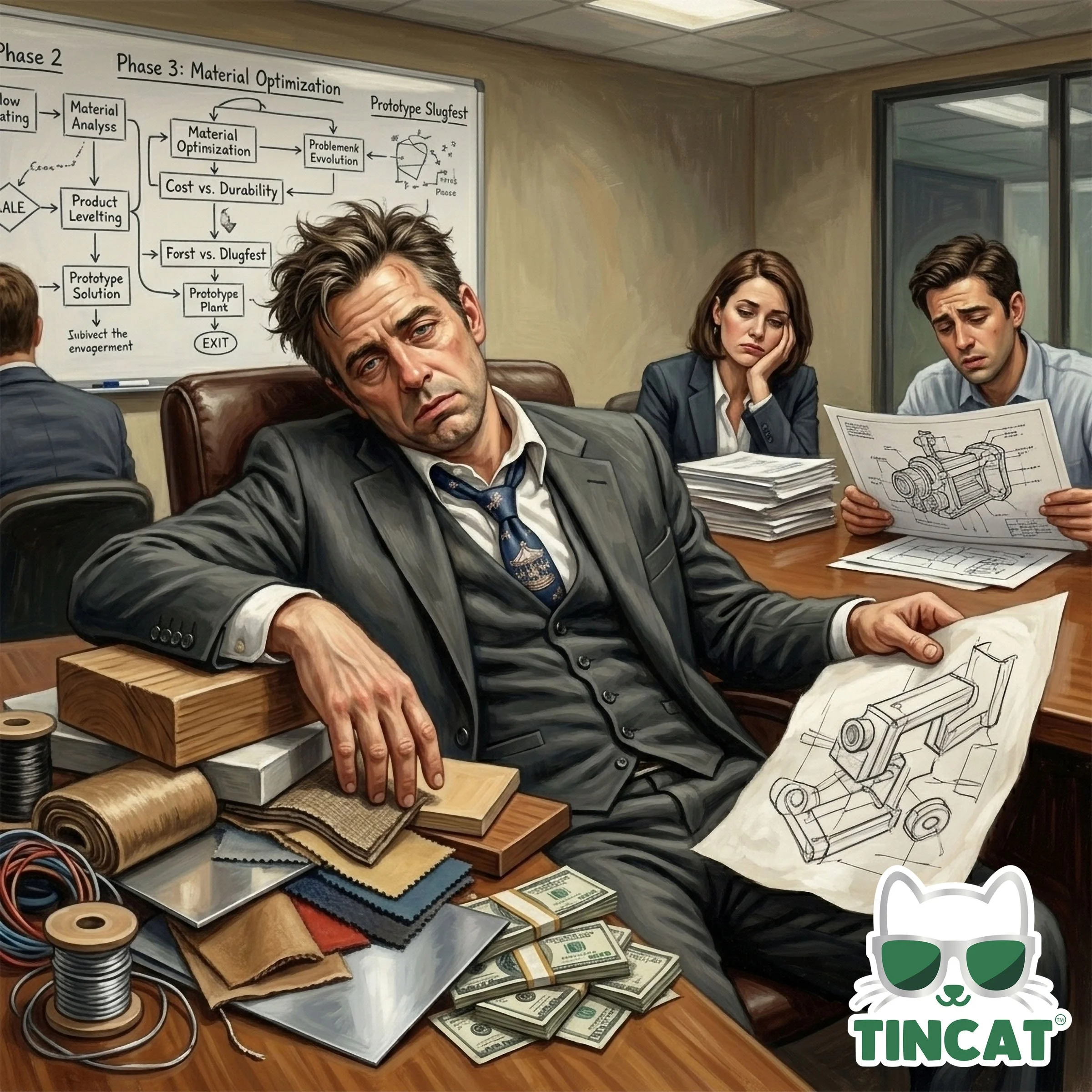
Material selection sounds technical, and that is exactly why it gets ignored at the concept stage. Not thinking about it early, and leaving the decision to someone else, costs founders in more ways than one.
The typical path looks like this. A founder or product developer has an idea and engages an illustrator or product designer to draw it up. It comes back looking great. From there, one of two mistakes usually happens. A stakeholder decides the material based on how it looks or feels, without checking whether that choice fits the design drawn. Or the drawing gets sent to a known factory with no specification beyond the design and rough dimensions, and the material choice is left entirely to them. "They are the experts," the thinking goes, and a price range gets locked in.
Why Leaving It to the Factory Is a Mistake
Choosing a material is one of the most holistic decisions in product development. It requires understanding how the product will be used and abused, and in what conditions. It requires knowing the finish and feel you are trying to achieve, the price point you need to hit, the limitations of that material including its production constraints, and, where relevant, its environmental impact.
Leaving that decision to the factory means most of these considerations get ignored. A factory is more likely to suggest materials and methods it already runs in-house, not necessarily the best fit for the product. It might choose the cheapest option to bring the quote down, or simply because it has excess stock of that material sitting on the floor.
Factory material selection stems from ease or cost, not the best fit for purpose.
Why Choosing by Feel Has the Same Problem in Reverse
A founder choosing a material because they like its look or feel runs into a different version of the same issue. That choice may never get checked against the design's actual limitations or assembly requirements, and the mismatch often surfaces later as a redraw or an added production step, both of which increase cost.
Material selection is not just about manufacturability or appearance. It is a set of decisions that need to be weighed together. And even once a material is confirmed, there are still variations within that material worth discussing, as the examples below show.
Four Material Decisions That Changed the Outcome
A light cover changed from polystyrene to polycarbonate. Tincat recommended switching the material of a plastic protective cover on a toy as the was likely to be dropped repeatedly. Both materials look identical, but polycarbonate removed the safety risk of broken plastic and sharp pieces on impact. The change happened at concept stage, so there was no price risk later.
A handle grip changed the casing material to solve a watertight problem. The product was going to be submerged in water repeatedly, and the original casing material, polypropylene, is notoriously difficult to glue. This material would have required holes and plugs. Switching the casing to high impact polystyrene (HIPS) meant the silicone grip could be glued on to a sonic-welded base, rather than relying on a bond that had the risk of leakage. At design stage, only a complete understanding of the material properties and production methods could produce this solution. From the design, they both looked identical.
Change the material, keep the appearance. The factory had suggested ABS with rounded edges to avoid sharp points on a figurine. Tincat recommended a softened non-phthalate PVC alternative instead, keeping the same appearance while removing the ‘sharp point’ risk entirely. That change required switching factories, because the original supplier could not run the material.
Simple change for strength. A shopping bag was designed to carry heavy liquids, and the factory recommended polyester did not offer enough strength at the seams. Nylon solved the durability issue without changing the bag's appearance.
Expert Insight
"None of these changes were about chasing a premium material or adding cost," says the Tincat team. "Each one solved a specific problem, safety, bonding, durability, that would have surfaced either as a customer complaint or a factory rework request if it had been left to chance. Getting material input at concept stage, before a design is locked to one factory or one look, is what makes catching these possible while they are still cheap to fix."
What This Means for Your Product
Do not choose a material by feel alone, and do not hand that decision entirely to a factory with no other input. Understand how your product will be used and abused, what finish you need, what price you are targeting, and what a given material's real limitations are, before the design is locked to one direction. A holistic view of material selection, weighing manufacturability, look, cost, and durability together, avoids redraws, factory switches, and safety issues that are far cheaper to catch now than after tooling.
Get a material selection review that weighs use, cost, and manufacturability together, before your design is locked in. Contact Tincat
Frequently Asked Questions
-
A: A factory is a specialist focused on producing efficiently with what it already runs in-house. It may suggest a material because it is cheaper, more familiar, or already in stock, rather than because it is the best fit for how your product will actually be used.
-
A: Not always, but sometimes. If a factory cannot run the material your product genuinely needs, as with the PVC example, switching suppliers may be the only way to get the right material without compromising on safety or performance.
Written by the Tincat Team